A home for Native roots farm foundation
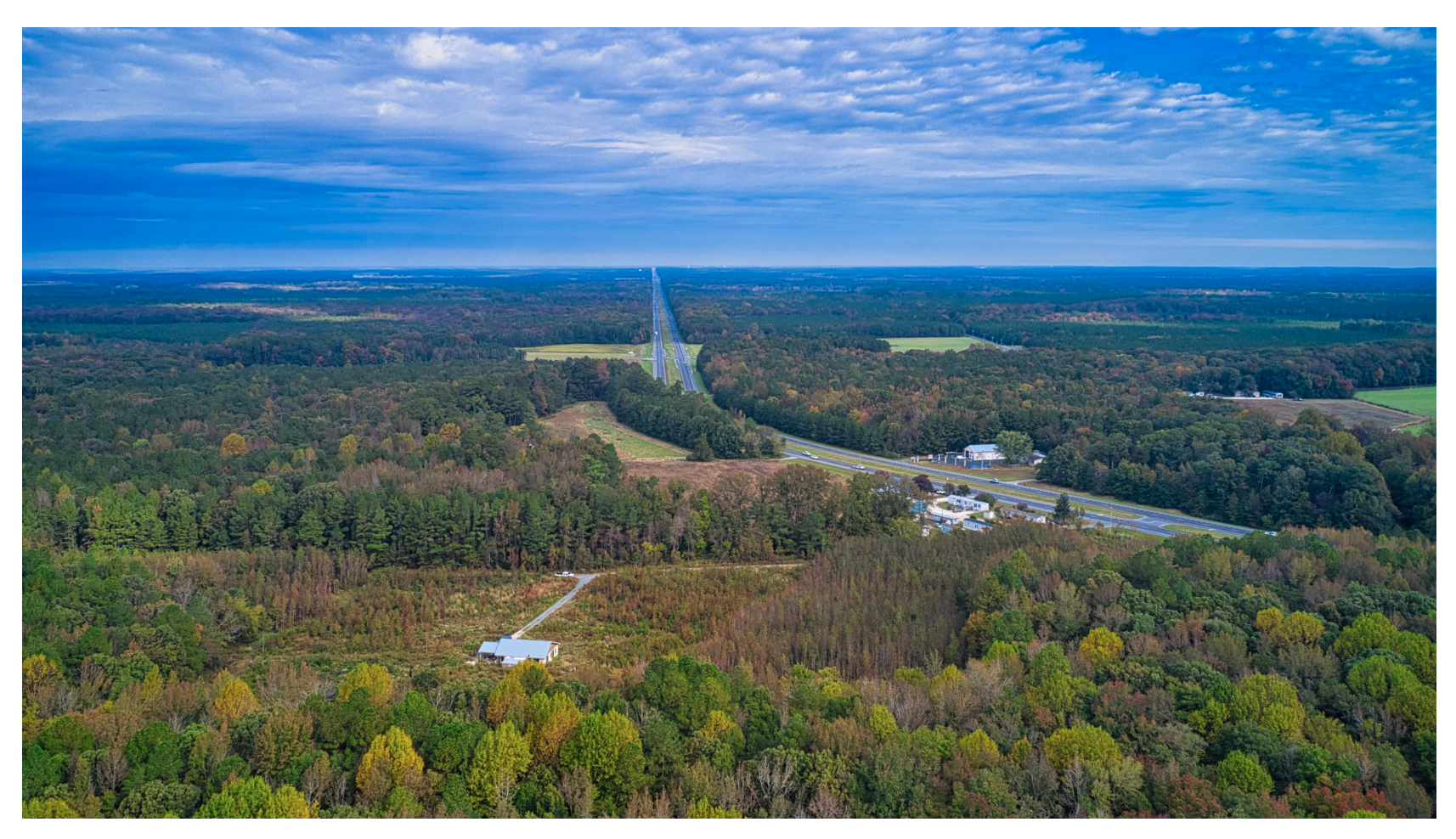
An aerial view of the 50-acre farm and forest land now in the care of the Native Roots Farm Foundation in Georgetown, Delaware.
As a Nanticoke in Southern Delaware Courtney Streett knows how hard-fought Native land and farms are. Her family has farmed the same land for three generations in traditional Nanticoke territory originally colonized by John Smith in 1608. That is where she learned to appreciate not just the land, but what she provides and how to nurture her.
Based in Millsboro Delaware, one of the fastest growing regions in the country, the Nanticoke have experienced rapid growth and destruction of their homelands that comes with forests being decimated and farms being paved over to make way for housing developments and shopping malls. As a result, the Nanticoke became disconnected from the natural world.
“This feels like a second wave of colonization to me,” said Courtney.
This was the inspiration for Courtney to establish the Native Roots Farm Foundation (NRFF) in 2020, “To uplift our local indigenous communities and our relationship with the natural world and with plants.”
Since then, Courtney had been in search of a home for the organization and last year a seller approached the Nanticoke tribe with a 50-acre woodland parcel in Georgetown, Delaware. The tribe passed the offer on to NRFF and funding was quickly established with a caveat that a conservation easement be established. Courtney was initially overwhelmed by the idea and responsibility until she contacted the Native Land Conservancy. There were a lot of hurdles, but NLC Executive Director Diana Ruiz was committed to helping Courtney navigate each one.
“I was so grateful,” said Courtney, “Her willingness to work with us truly meant the world.”
Diana helped NRFF craft a CE that was culturally grounded and met the funder’s requirements.
“NLC has been instrumental in making this possible, in making cultural revitalization and food sovereignty and indigenous sovereignty possible in the space we now call Delaware.”
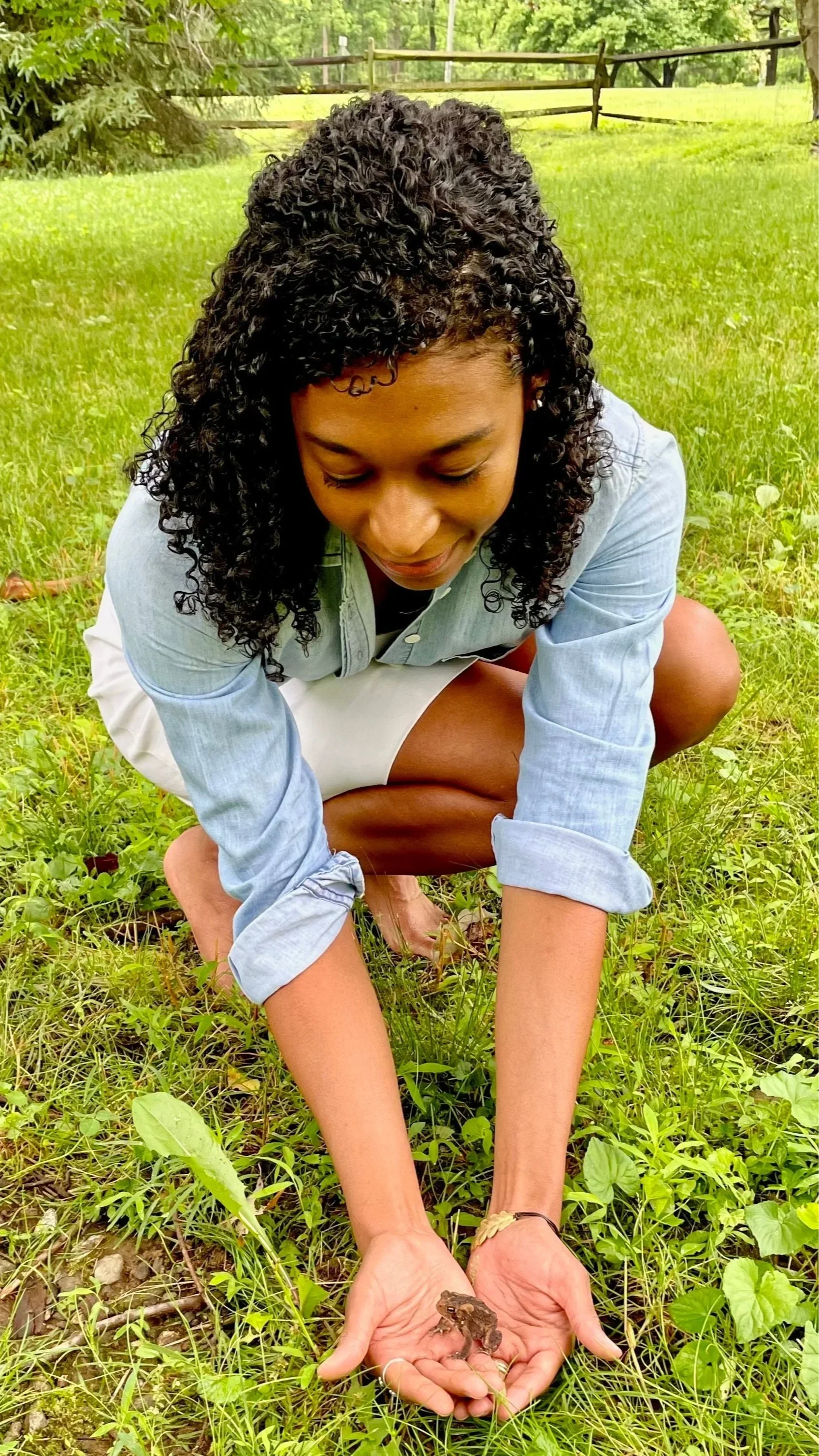
Courtney Street covets a tree toad on the farm land.
The land NRFF has acquired is attractive for its thicket of sweetgum trees, a forest of pine, white oak and at least three American chestnut trees. There is also a house that serves as an office and a greenhouse for starting plants but most importantly Courtney says, it is land restored to Indigenous care in Nanticoke country.
Located on a major north south corridor that leads to the Atlantic shore, it is also very accessible to not only the Nanticoke, but also their Lenape, and Nanticoke Lenne Lenape neighbors. Courtney said they held community meeting among tribal people to determine how best to engage with the land.
“Tribal members want a space that is sacred where they can gather,” said Courtney, “They want community gardens and the opportunity to harvest berries and fruit. This will be a pretty exciting resource for our community to have.”
In preparation for the finalizing and recording of the official CE document, NLC Land and Cultural Knowledge Caretaker Asa Peters visited the land with Courtney in May. He pointed out the significance of several small ponds that had not been included in the draft of the terms. They are places tribal people would want to preserve for quiet reflection and ceremony.
“In an official sense, this is a long-term bond of common interests and accountability. Simultaneously, my trip was also an opportunity to build relationships with our Nanticoke relatives,” said Asa. “It was a joy to work and travel with PresidentExecutive Director Courtney Streett. She provided a beautiful orientation to the Nanticoke communities of the region, the work and priorities of NRFF, and some of the nuances and qualities of the landscape and waterways of their homeland.”
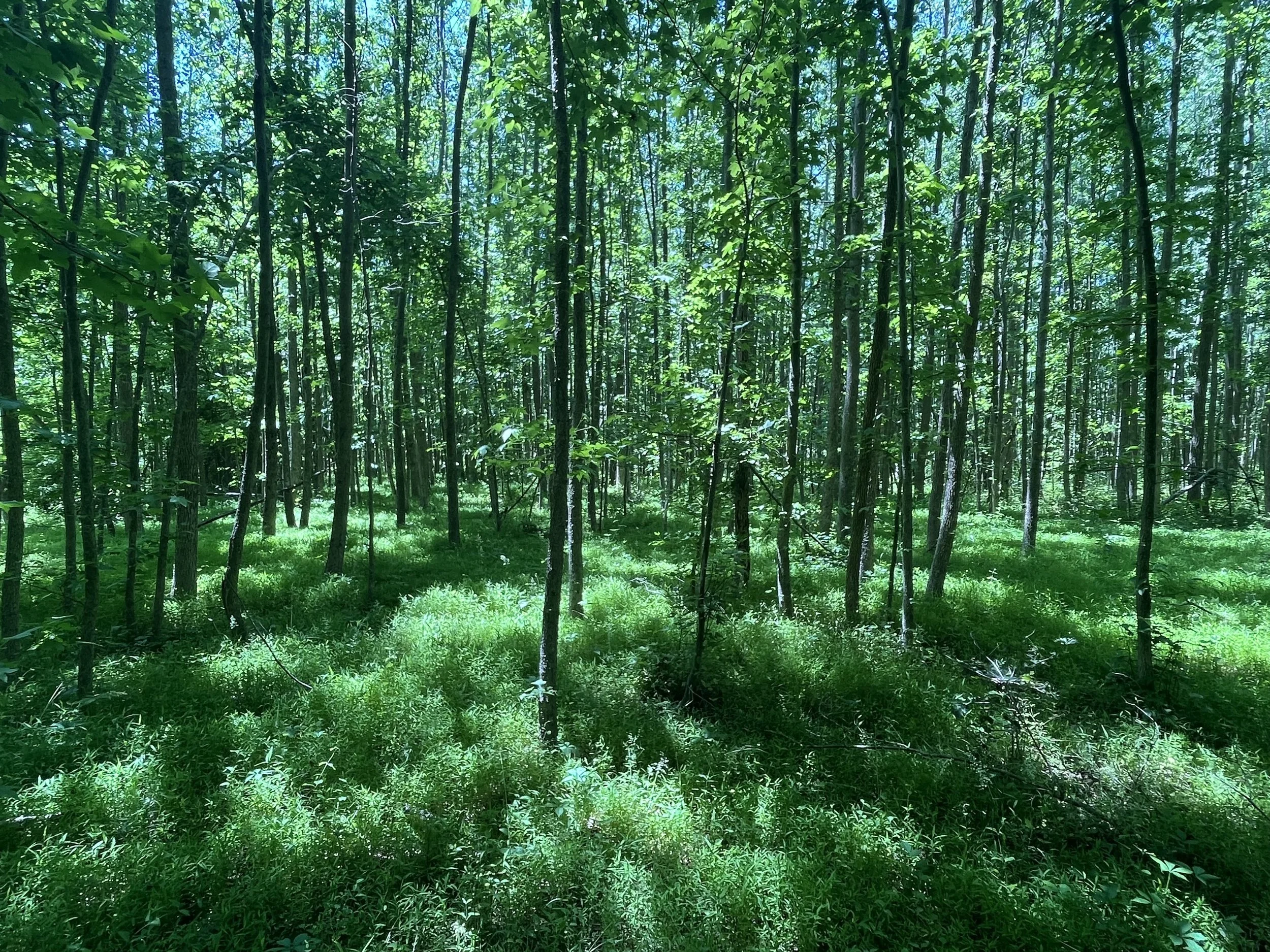
The sweetgum thicket.
For Courtney and the NRFF staff it was a chance to interact with their new partners at NLC.
“I had a great time running around the forest making sense of the land-use history Courtney shared with me.” Said Asa. “Seeing the mixed loblolly pine and oak forests meeting groves of dense sweetgum, where at one time the forest met the field, left interesting views behind.”
Courtney says remaitriating this land to Indigenous people has been transformative and healing. They now will have an opportunity, “to stick their hands in the soil and grow Nanticoke squash and Lenape blue corn, and tehim, the Lenape word for strawberry.”
It is not lost on Courtney that the CE is very much a part of a colonized system that they must work with to achieve their goals, but having NLC to guide them through the bureaucracy made it possible to do it with Indigenous integrity.
“It is a place where we can dream … We can have ceremony, we can forage for foods, we can have cultural burns we can have three sister gardens and a medicine wheel garden and a food forest. We can reconstruct a long house these are all in the CE.”