A New Encounter Comes with A Magnificent Gift
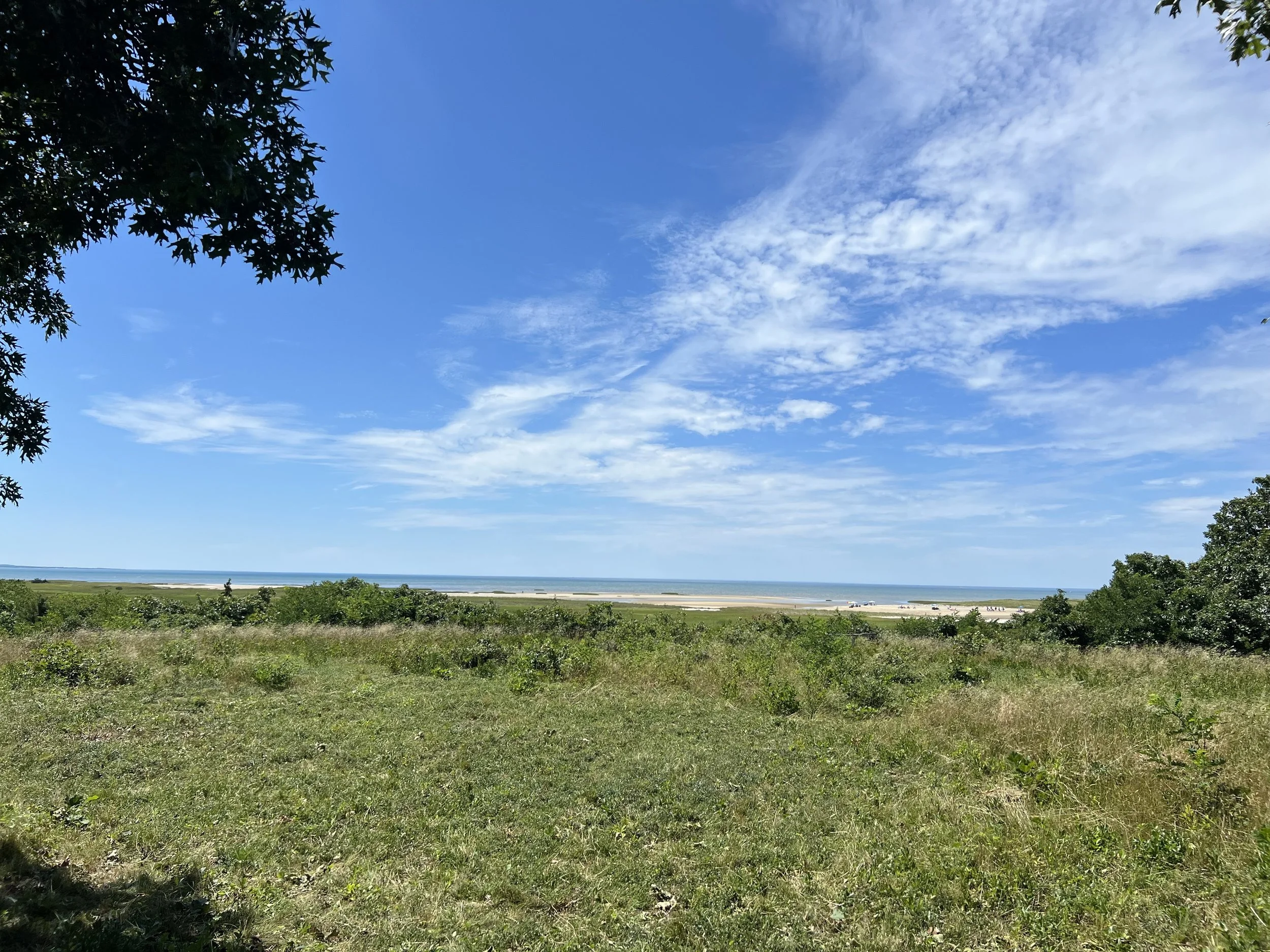
The view from T8nupâhs Uwatuhshât .
From the highland of the 20 plus acres in Eastham that most recently came into the care of the Native Land Conservancy, there is a panoramic view of the Bees River snaking through an expanse of wetlands, the tidal flats of First Encounter Beach, and Cape Cod Bay.
Standing amid the low bush bearberry and thickets of beach plum one can imagine how the Nauset cherished this view, how they loved the land and all the beings that lived on the land, and sea. It is a place the People regarded with great care as the land sustained them like a mother and they sustained her. The relationship between the People and the Earth is familial. She has missed the People, so when we gathered to celebrate her being restored to Indigenous care last week, we could sense her welcoming us home.
Being referred to by colonized names like Eastham, Cartway, Boat Meadow, or a First Encounter place was peculiar to her after being the ancestral land of the Wampanoag for more than 12 thousand years and hosting villages of the Nauset people.
So, at a gathering of about 30 people to celebrate the transfer to Indigenous care, it was important that one of the first acts of restoration was to give her a name she would recognize.
T8nupâhs Uwatuhshât
T8nupâhs Uwatuhshât
T8nupâhs Uwatuhshât
The name with the number 8 representing a unique long o sound, translates in Wôpanâak to at the turtle’s nest and was joyfully repeated three times.
It honors the diamondback terrapin turtles that annually emerge from the sea to climb the bluff and deposit their eggs in the early summer, as has been done for millions of years. The next generation of this marvelous being, with ancestors that walked the earth with dinosaurs, grows in pinkish eggs barely an inch and half around for about 60 days before poking their tiny heads through the sand and instinctively marching toward the brackish waters that await them.
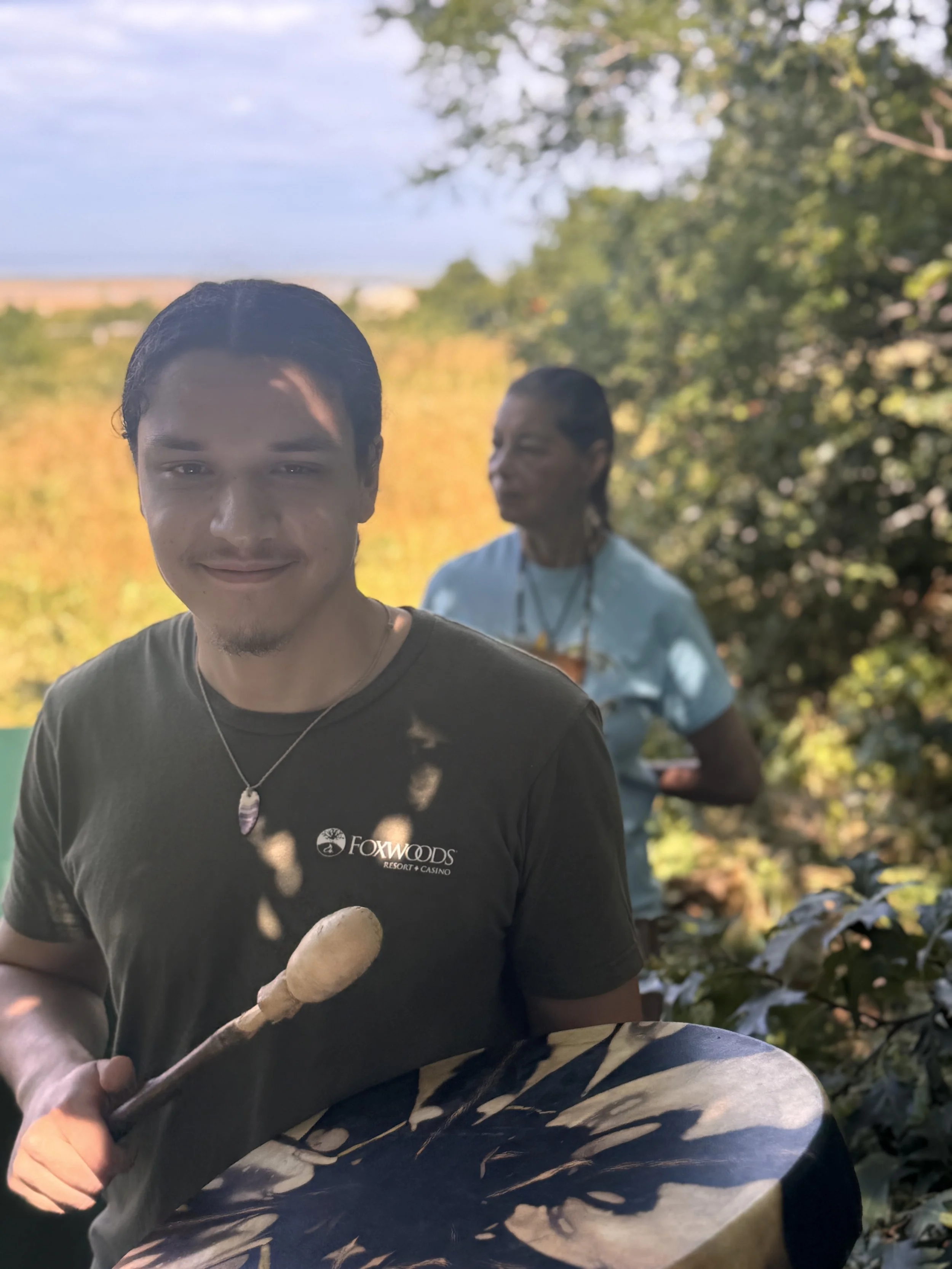
NLC Land Care Assistant Seeqan Weeden and NLC Board Vice-Chair Marlene Lopez welcome the land with the beat of the drum.
It is a phenomenon not lost on the neighbors of T8nupâhs Uwatuhshât who have taken great care to protect those turtles and their nesting places by prioritizing a life in balance with their natural environment. Knowing the seasons of nesting and watching for the eggs to hatch and safely usher the tiny crawlers to the sea. It is critically important work as the terrapin is a threatened species in the Commonwealth of Massachusetts, but they thrive on Cartway North and South in Eastham where people like Joanna Buffington and her neighbors become vigilant in May and June, watching for the mother terrapin and then monitoring the nests for the next two months to protect from predators, unobservant hikers, cars and delivery trucks. If you wandered into the area during this season, you would likely meet Joanna wearing a faded festival T-shirt and her permethrin-soaked khakis stuffed into socks poking out of a well-worn pair of hiking shoes. A broad- brimmed hat shades her bespeckled face where her wide smile belies the serious nature of her mission. While her free spirit shines through, her passion is resolute and issued to many a FedEx driver that has the few homes on Cartway South and Cartway North on their route. The message is clear. Take care to avoid the terrapin.
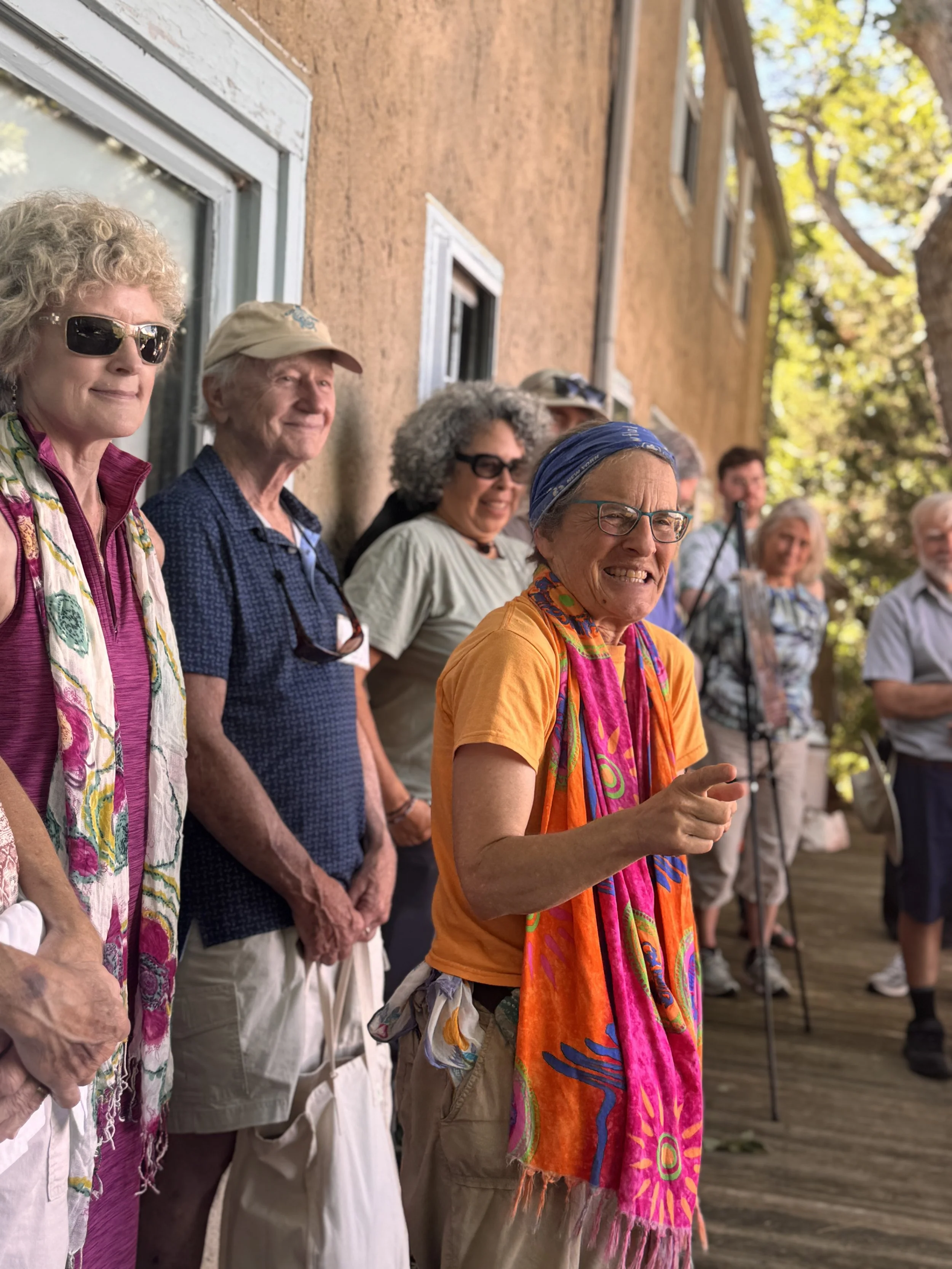
Joanna Buffington celebrates the land transfer to Indigenous care with neighbors, friends and NLC staff and board members.
When the land next to Buffington’s came on the market last year she, her neighbors Bill Allen, Henry and Betsy Lind, and the Eastham Conservation Foundation banded together to ensure that no developer would take advantage of the land without consideration for the turtles. They believed the best way to preserve the land, the turtles, and all beings living on it was to return it to Indigenous care. They advocated for NLC to become the next deed holder and made generous financial contributions that made the land transfer possible.
Joanna and her neighbors are not Wampanoag but have assumed the values of the People of the First Light, to live in balance with and not on top of the circle of life. It was the way of the Nauset to care for the land and in the words of NLC President and founder Ramona Peters, it is remarkable to find such passion among these neighbors and ECF.
“It is impressive that you care for the land in much the same way as we do. It is unique and profound to find non-native people who are attached to the land and the beings who live on it in such a good way. People like you are few and far between,” she said.
“We have immense gratitude for this specific location, this historic footprint that recalls a first encounter. It marks the place of an awkward beginning, but first encounters can take many forms. Today represents a first encounter of another form. A first encounter with anyone who has donated a gift of this magnitude.”
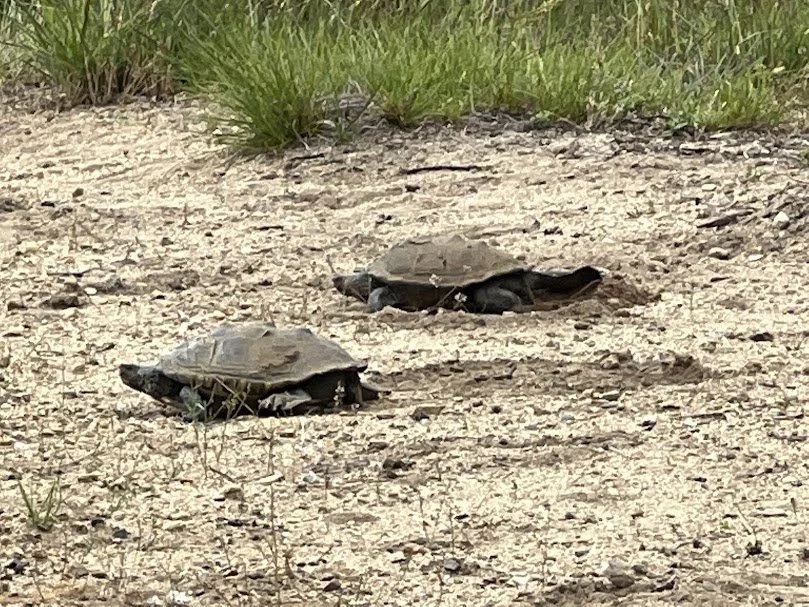
A pair of tarrapin turtles laying their eggs in Eastham. Photo courtesy of William Allan.
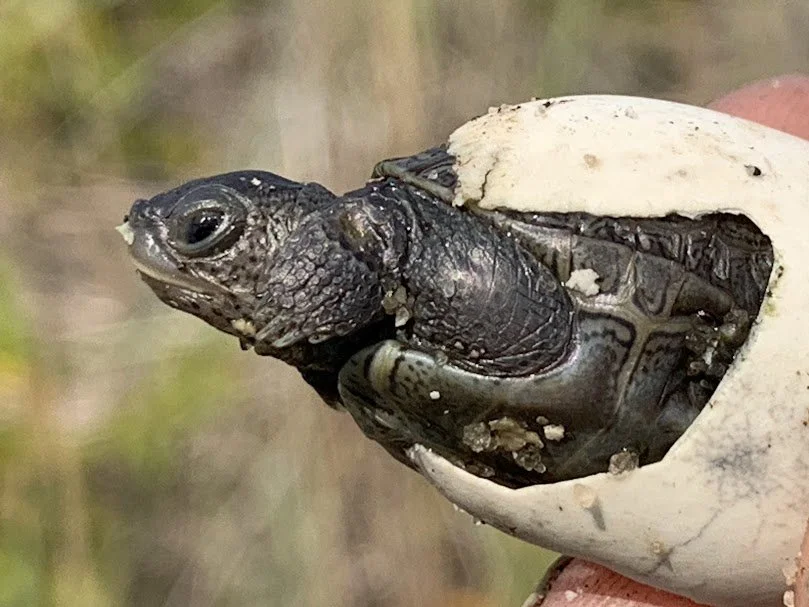
A baby terrapin emerges from it’s shell. Photo courtesy of William Allan
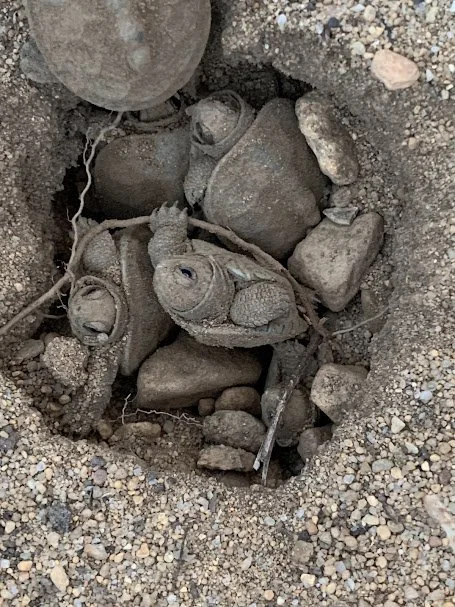
Hatchlings emerge from the nest. Photo courtesy of William Allen.