“You can’t just return land back to the people, you need to return the people to the land.”
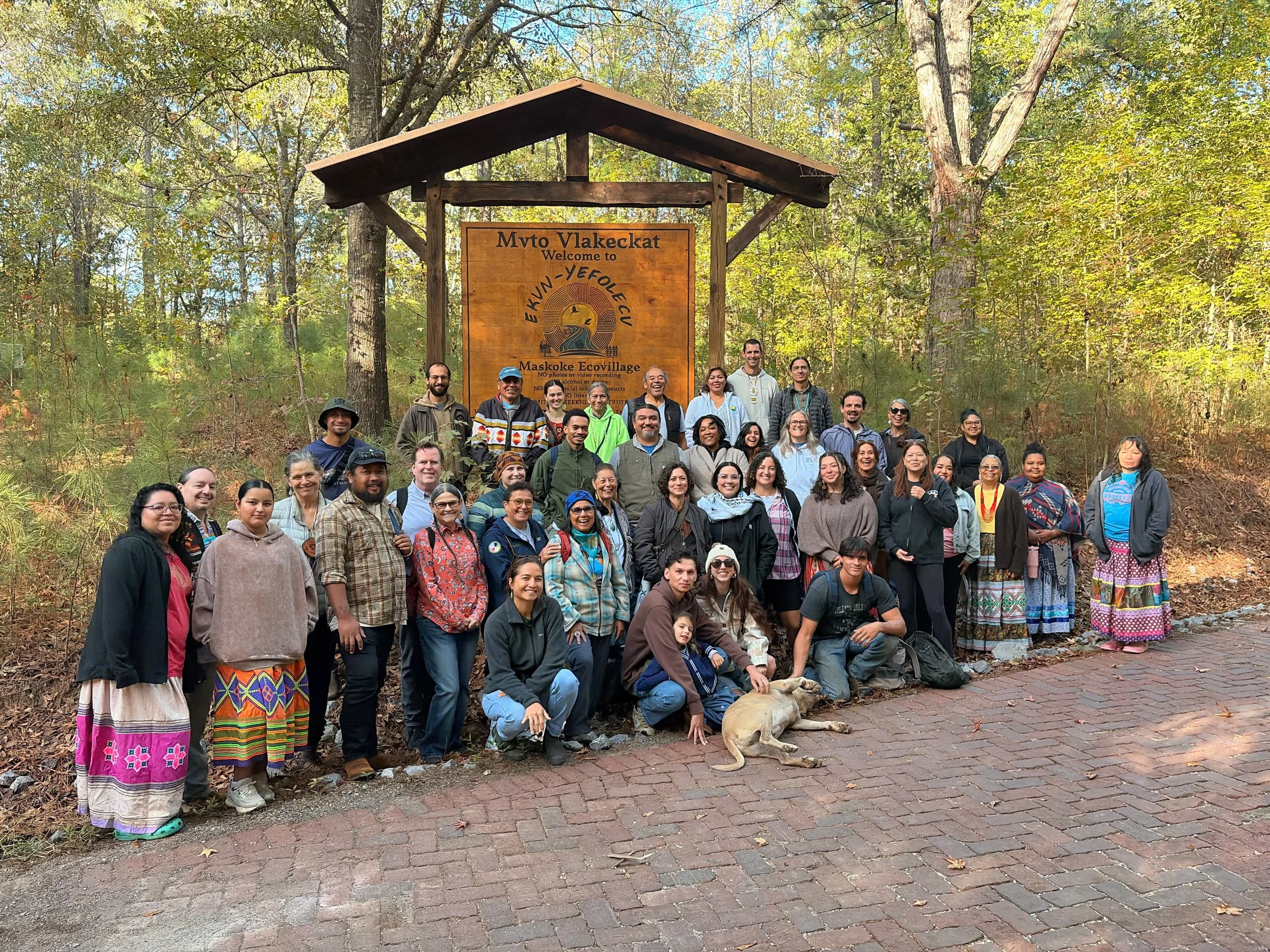
These are words shared by an attendee at the Ekvn-Yefolecv Indigenous Gathering held at their Maskoke ecovillage in Alabama in late October.
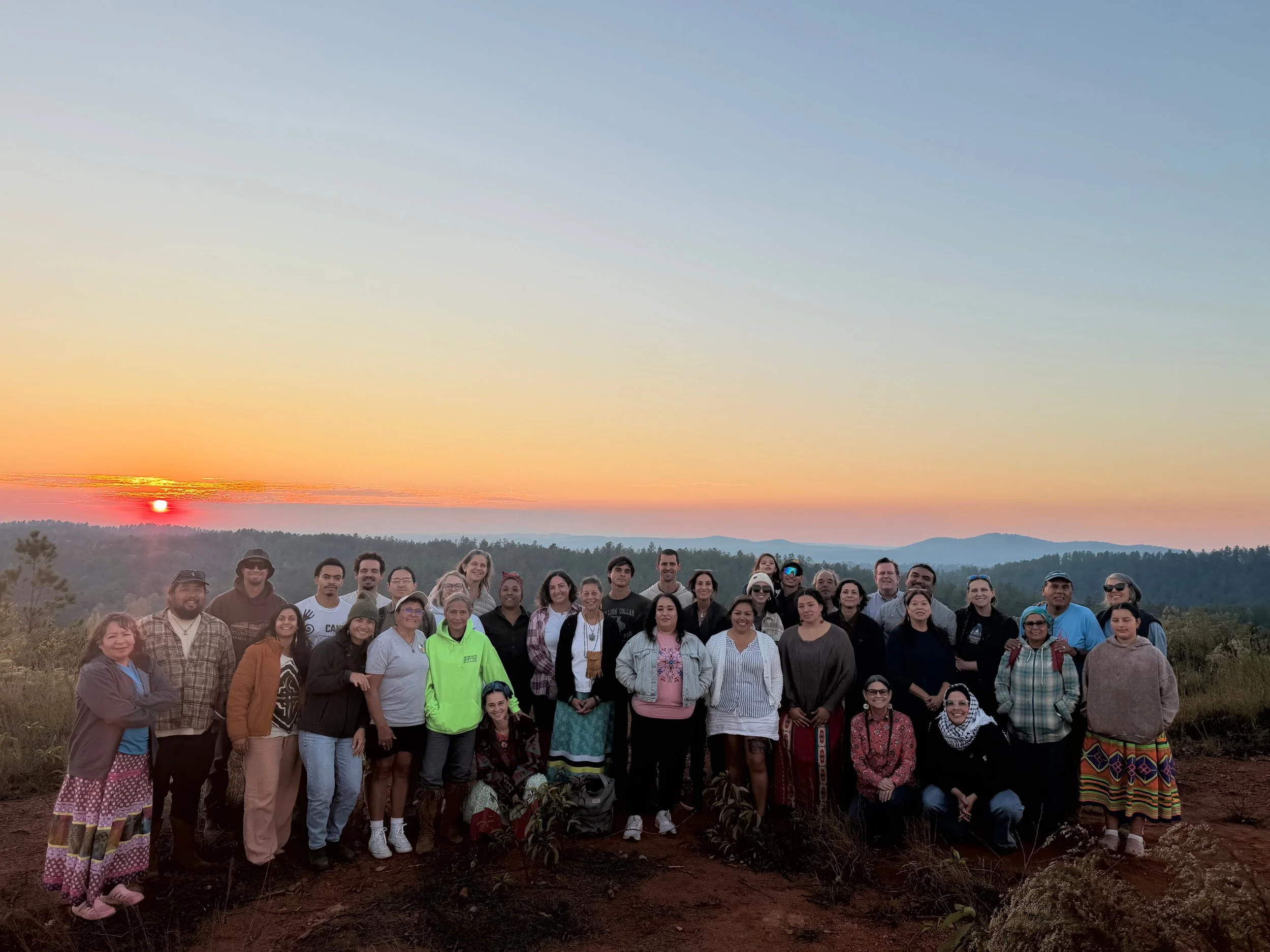
The place itself manifested those words for more than 30 Indigenous land and culture keepers who participated in the three-day event organized by Ekvn-Yefolecv in partnership with Kalliopeia Foundation.
It is a place where being a guest requires an enormous amount of patience and tolerance for things you may not understand; songs, prayers, customs, and ceremony all in the Maskoke language. But while the language may have been unfamiliar, the feelings and gratitude evoked were universally understood by all.
The ecovillage sustained by Maskoke people who have abandoned a capitalistic life for one that lives in balance with the earth are completely self-sustained on their lands where they practice their traditions and culture and speak only Muskogee to one another in their daily life.
They not only returned themselves to their ancestral homelands after 180 years of forced removal, but they are also returning traditional plants to the gardens and forests, rare and enormous sturgeon to the waters, and buffalo to the grazing pastures. The land has welcomed the return of the people and hearing their language for the first time in nearly 200 years is a much healthier and thriving place for it.
Language vitality and what it means to sustaining a culture was not lost on a Salish Elder who began the effort to recover her people’s language as a young woman and now has grandchildren who are speaking Salish as a first language. It is critical to understanding who they are, where they belong, and why their homelands are so important.
Many other languages were uttered during the gathering including Hawaiian, Wabanaki, Diné, Choctaw, and Wampanoag. In addition to cultural practices passed down through many generations, these languages fuel our Traditional Ecological Knowledge (TEK) that guides us in the ways we engage and connect with the land, wildlife and environment.
A healthy environment sustains the plants that have healed us for hundreds of years, a Choctaw Medicine Woman told us, “The day the medicine isn’t there anymore we will no longer be a people.”
Perhaps the most hopeful of the practices shared were the ones that involved raising the next generation of culture bearers to carry on the work being done in the room. “It would be worth very little if all of what we know just stays with us.”
To build a legacy takes a next generation who knows and loves their culture and traditions. An example set beautifully by the children of Ekvn-Yefolecv who played a vital role in the hospitality including serving meals made from food harvested from the village farm and participating in ceremony and social songs and dances.
The sharing of experience and practice dominated discussions about how to recover, protect and nurture our ancestral homelands from Hawaiian Islands colonized by sugar plantations where they work to remove eucalyptus to allow native plants to be restored, to cranberry bogs being restored to a natural landscape on Cape Cod.
It seems at times to be overwhelming unless you are in a space like the Ekvn-Yefolecv round house with people who believe that every small effort leads to a larger one and inspires many more.
Kutâputunumuw